
Encouraging and Facilitating Youth Access to Egyptian Cultural Heritage – My Heritage, My Right
Project Budget
EU Contribution
Countries
Partners
EVENTS
EVENTS
MEDIA
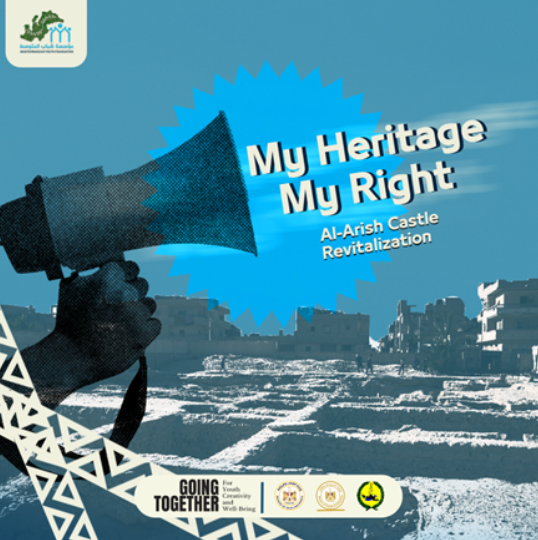
Encouraging and Facilitating Youth Access to Egyptian Cultural Heritage – My Heritage, My Right
- The Mediterranean Youth Foundation (MYF) urges the Egyptian government to revitalize Al-Arish Castle, an important cultural heritage site in North Sinai, to enhance youth engagement, community development, and sustainable tourism. Egypt is renowned for its iconic archaeological sites, yet many culturally significant locations remain underfunded and overlooked, particularly in remote areas. North Sinai faces unique challenges that hinder effective heritage preservation; however, sites like Al-Arish Castle can be pivotal in enriching Egypt’s cultural narrative and empowering local communities.
- The Castle, established by the Ottoman Empire in 1560 AD, needs restoration despite its rich history. MYF’s Al-Arish Castle Revitalization Project aims to transform the site into a cultural hub, engaging local youth in preservation efforts while promoting personal growth and resilience. By offering workshops and public sessions, the project connects cultural preservation with youth empowerment.
- Proposals from MYF include: allocating a dedicated budget for restoration, encouraging youth participation in conservation, developing cultural tourism events to attract visitors, conducting necessary restoration work to ensure the castle’s historical integrity, and promoting green tourism initiatives to enhance community involvement and capacity-building in heritage management.
- MYF emphasizes the urgent need for action by the Egyptian authorities to turn Al-Arish Castle into a symbol of youth empowerment and sustainable cultural tourism in Sinai. The organization encourages public awareness of the castle’s significance through social media engagement and community advocacy.
- As part of the Al-Arish Castle Revitalization Project, supported by UNESCO, The Mediterranean Youth Foundation – MYF is advocating for better cultural heritage management and preservation policies in Egypt. The project aims to restore and activate Al-Arish Castle as a cultural and community hub, using art, sports, and local engagement to strengthen cultural identity and promote sustainable tourism.
- Within this framework, MYF is launching an advocacy campaign calling for improved and facilitated access to cultural and heritage sites in Egypt for young people up to 29 years old. Lowering entry fees for all young people would make cultural engagement more inclusive and accessible.
Background
- Currently, Egypt offers student discounts at museums and heritage sites, but young adults who are not enrolled in academic institutions face barriers due to higher fees. For example, the Egyptian Museum charges 550 EGP for international visitors and 30 EGP for Egyptians, with students paying only 10 EGP.
- This policy excludes many young people, including those who could not attend school for social or economical reasons, those not currently studying, or those lacking formal education. In 2024, youth unemployment (ages 15-29), constituted 64.6% of the total unemployed population, underlining the financial difficulties many young people face during the early stages of their careers. Additionally, 9% of Egyptian youth (ages 15-29) are illiterate, with higher illiteracy rates among females (13% vs 2% for males). Furthermore, about 17% have less than intermediate education, and only 22% attended a university degree or higher.
- Many young people express their frustration about these barriers. A young person from MYF’s community shared: “I am 28, but I’ve never seen the pyramids because I simply cannot afford the ticket price.”
Alignment with Egyptian government policies
- MYF proposed initiative aligns closely with the Egyptian government’s strategic focus on youth empowerment and cultural engagement, as outlined in its national development
- frameworks. Central to this is the Egypt Vision 2030, which prioritizes youth empowerment, cultural inclusion, and human development.
Recent government initiatives support youth engagement, such as the Global South Youth Bureau, promoting youth diplomacy or the Shabab balad platform, launched in 2022, which aims to connect young people with education, training, and employment opportunities, with a goal of training 1 million youth in its first phase.
On May 6, 2025, the Ministry of Culture launched the “Welcome Students” initiative to facilitate access for university, institute, and school students to museums, theaters, and creativity centers affiliated with the Ministry, offering a 50% discount through a unified student card.
While this step is significant, there are two main observations:
- Card cost: The issuance fee (200 EGP) may pose a burden on some students, which contradicts the goal of reducing costs.
- Possibility of waiving the card requirement: The discount could be applied directly upon presenting a student ID or national ID, as is already practiced in some museums, rather than requiring students to obtain an additional card.
- Linking this initiative to the Mediterranean Youth Foundation’s proposal to extend discounts to all youth up to the age of 29, regardless of educational status, would make it more inclusive and equitable, and align it with Egypt’s Vision 2030 for youth empowerment and enhanced cultural participation.
- MYF calls on the Ministry of Tourism and Antiquities and the Ministry of Youth and Sports to support the MY HERITAGE, MY RIGHT, which strengthens young Egyptians’ sense of belonging by integrating them into the country’s cultural landscape, making heritage more accessible as a tool for inclusion, identity, and social engagement.
Possible Policy Measures
To ensure fair access, MYF urges Egyptian authorities and cultural institutions to implement:
- Egyptian Youth Discount Initiative: Aligning with international standards, such as the European Youth Card which is used across 36 countries in Europe, this program would grant reduced entry fees to youth up to 29 years old at cultural sites and museums. Instead of a separate card, youth would simply present their national ID. Refugees under 29 would receive free access by showing their registration card.
- Free Museum Day: Following successful models implemented in many European countries, free entry days would be introduced on a monthly or periodic basis. Special free museum days could be held on key dates such as International Youth Day (August 12), International Women’s Day (March 8), International NGO Day (February 27), and World Refugee Day (June 20).
Impact & Conclusion
- Introducing these measures would enhance young people’s engagement with arts and cultural heritage while also promoting inclusivity and strengthening their sense of belonging to the country.
- Expanding the benefits to all young adults up to 29 years old would ensure that those who are not enrolled in university but are working or pursuing alternative paths such as internships, volunteering, or other professional choices have the same opportunities to explore Egypt’s rich cultural heritage.
- From an economic perspective, increased youth participation would boost visitor numbers, support local businesses, and enhance the visibility of Egypt’s artistic and historical sites. Aligning with international best practices, Egypt can foster a more inclusive and dynamic cultural environment for its youth.
- We call on authorities to take action and make cultural heritage truly accessible to all young people—regardless of their educational or professional background. This is essential for building a society in which new generations actively engage in preserving and celebrating their history.
How You Can Take Action
- MYF is launching this sign-on letter to urge policymakers to implement these measures and make cultural heritage accessible for all young people in Egypt.
- Spread Awareness: Share this statement with your network and encourage others to support fairer access to cultural heritage. If you own a shop, clinic, or public space, consider printing and displaying this statement to help spread the message within your community.
- Engage Creatively: If you’re a content creator, artist, or storyteller, create a video, artwork, or post highlighting the importance of cultural heritage and why accessibility matters. Share your thoughts using the hashtags #MyHeritageMyRight #YouthForHeritage #HeritageForAll #OpenDoorsToHeritage.
- Public Donations: MYF has successfully received, from the Egyptian Authorities, a government license to help restore and activate the castle, empower the local community, and strengthen cultural heritage initiatives.
You can donate through the following bank account:
- Account Number (EGP): 100064308119
- IBAN: EG580010020300000100064308119
- Bank Name: COMMERCIAL INTERNATIONAL BANK – CIB
- SWIFT Code: CIBEEGCX203
- Bank Address: PART 162 EL TESEEN NORTH STREET CMC BUILDING (CAIRO MEDICAL CENTER)
Together, we can ensure Egypt’s rich cultural history is accessible to all!

project includes:
Project Status
Completed
Countries covered
4
Start date
31-05-2025
End date
30-05-2027
Programme
Erasmus+
Key Action
Learning Mobility of Individuals
Action Type
Mobility of young people